
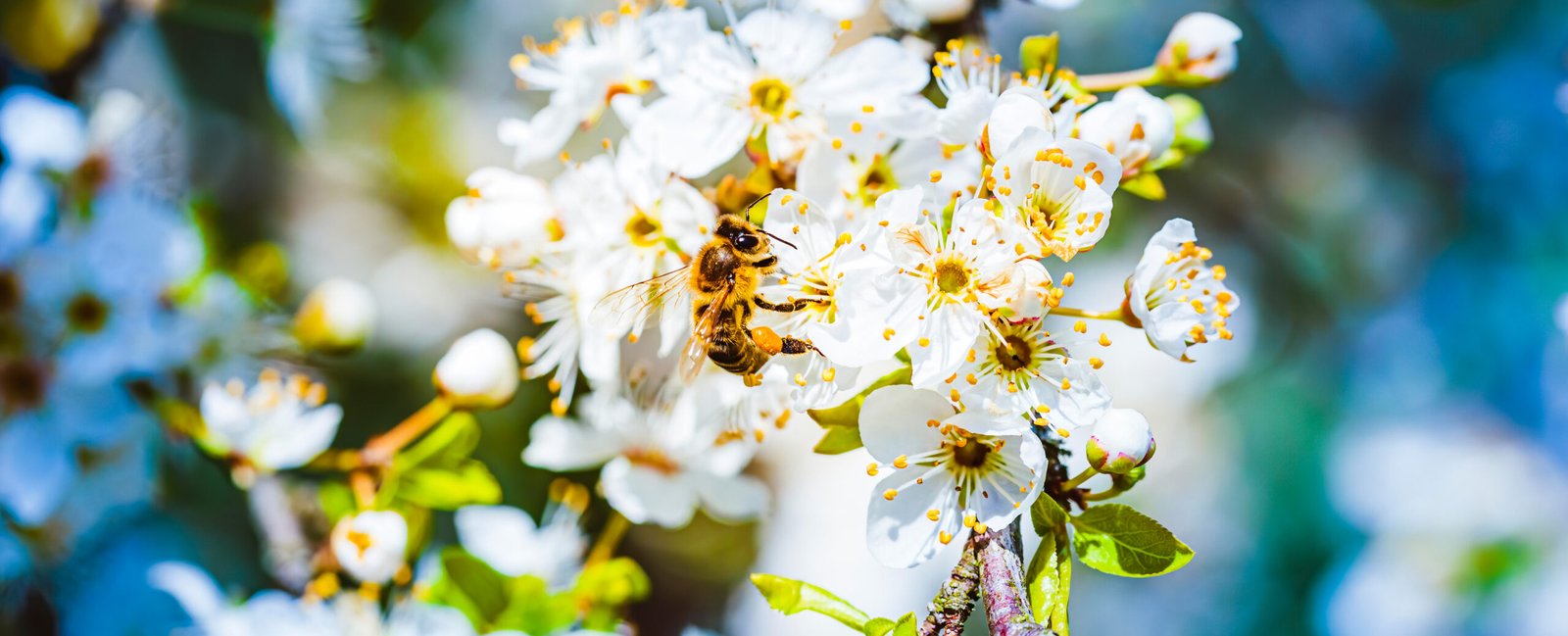
Recent research points to mounting threats facing bees, including wars, microplastic pollution, and light pollution, which place the future of these vital creatures in real danger. Bees, which are among nature’s most important pollinators and are responsible for pollinating about 70% of the food crops we consume, face new challenges that go beyond traditional risks such as habitat loss and pesticide use.
Wars and Their Impact on Bees
Studies have shown that wars and armed conflicts have a direct impact on bees and their habitats. For example, the Russian invasion of Ukraine has reduced crop diversity, depriving bees of varied food sources throughout the year. Furthermore, the use of chemical weapons and heavy pollutants during conflicts leads to environmental contamination, which harms bee health, reduces their ability to forage, and weakens their immune systems. In addition, wars cause the destruction of forests and agricultural areas on which bees rely for collecting nectar and pollen, further increasing the pressure on these vital creatures.
Microplastic Pollution and Its Impact on Bees
Microplastic pollution has become an emerging threat to bee health. Synthetic plastic particles such as PET have been found in bee hives across Europe, suggesting that bees are exposed to these contaminants through honey, pollen, and beeswax. These particles accumulate in bee tissues such as the brain and gut, causing behavioral and health changes that may affect colony survival. Microplastics also weaken the bees’ immune system and affect their body weight and feeding behavior, which may reduce their pollination efficiency.
Light Pollution and Its Impact on Bee Behavior
Light pollution, caused by artificial lighting such as streetlights and house lights, is another threat to bees. Bees prefer to sleep in the dark inside their hives, but rising temperatures cause them to sleep outside the hives where they are exposed to artificial light, which reduces both the duration and quality of their sleep. This sleep deprivation leads to impaired communication among bees, as worker bees rely on complex dances to guide their peers to food sources; poorly rested bees perform their dances with less precision, which affects the colony’s foraging efficiency.
Additional threats
In addition to these threats, other factors such as air pollution, the use of antibiotics that affect bee behavior, and the interaction of pesticides—which form toxic “cocktails”—have a significant impact on bee health. Climate change and the destruction of natural habitats also continue to put pressure on bee populations, leading to the extinction of some species.
Summary
Bees today face multiple and overlapping threats, ranging from wars that destroy their habitat and reduce their food diversity, to microplastic pollution that affects their health and behavior, to light pollution that disrupts their sleep and impairs their vital communication. These challenges require urgent action to protect bees, whose role extends beyond nature alone; they are a fundamental component of global food security and the stability of ecosystems. Protecting bees means protecting the future of food and the environment for all of humanity.