
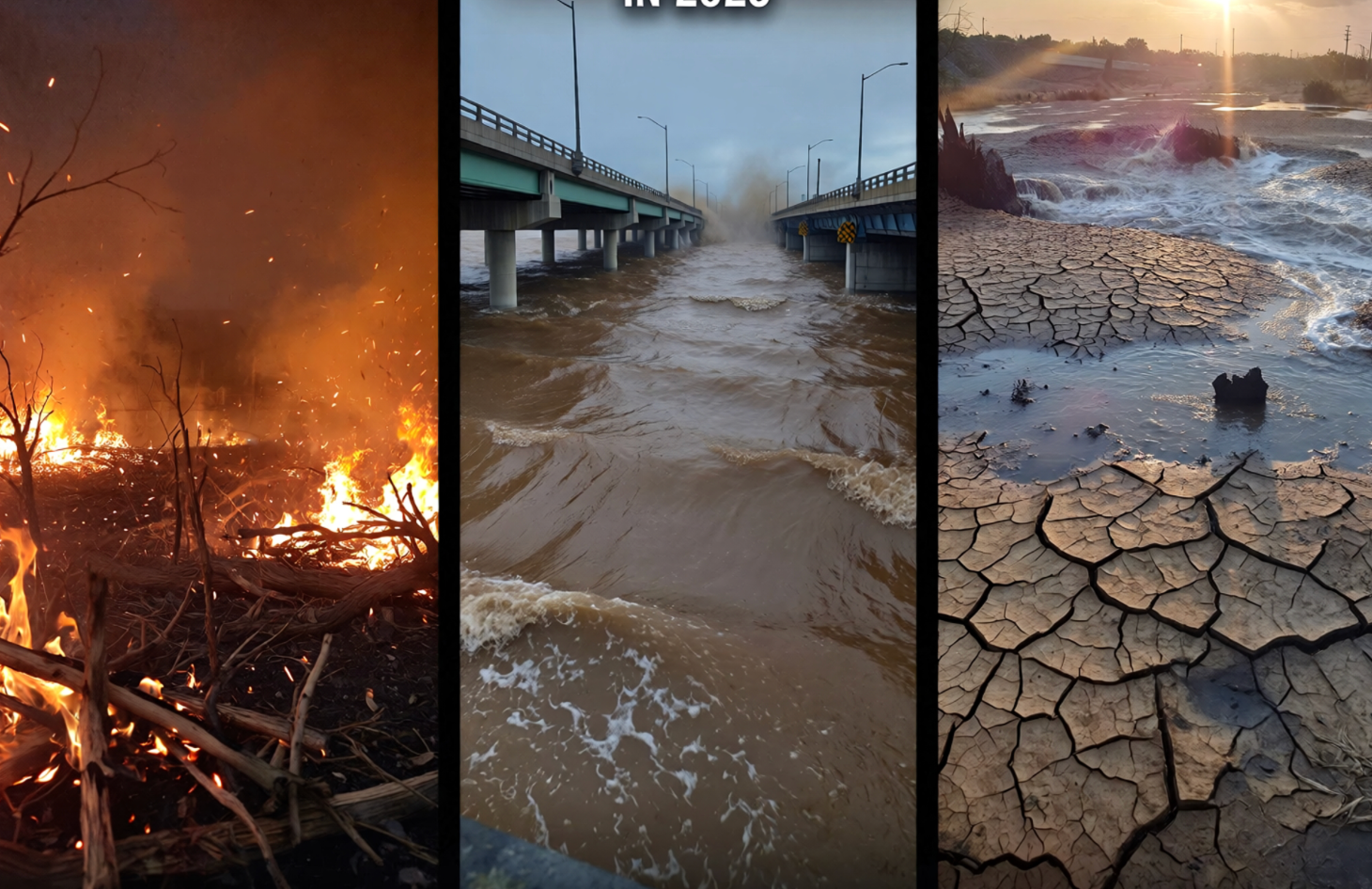
International reports indicate that climate-related disasters in 2025 alone cost the world more than $120 billion in direct losses, most of which were attributed to the 10 largest weather-related extreme events. These figures include only insured losses, meaning that the true cost of climate change is much higher than reported.
Introduction: A Record Year for Climate Costs
The year 2025 is described as one of the costliest in terms of climate-related disasters, with unprecedented heat waves, widespread wildfires, hurricanes, floods, and droughts striking four continents. These events are no longer rare exceptions, but rather part of a new climate pattern fueled by rising global average temperatures and continued emissions.
$120 billion: What does this bill mean?
- The figure of $120–122 billion represents roughly the cost of the ten largest climate-related disasters in terms of insured losses in 2025, not the total global losses.
- Broad estimates suggest that annual losses associated with extreme weather in 2025 exceeded $250 billion when accounting for broader damage to infrastructure, agriculture, and supply chains.
These amounts are equivalent to the budgets of middle-income countries and place a strain on economies through production disruptions, asset destruction, and rising insurance and reconstruction costs.
Where do disasters strike, and who pays the price?
Specialized reports indicate that the United States suffered the largest share of losses in 2025, with wildfires and heat waves alone causing an estimated $60 billion in damage, making it one of the most costly disasters globally. In contrast, Asian countries emerged as a particularly vulnerable region, especially due to massive floods that caused losses of nearly $25 billion and claimed the lives of thousands of people.
Although the figures often point to wealthy countries due to their well-developed insurance systems, poor countries bear an unseen share of the losses through displacement, loss of livelihoods, and the degradation of land and natural resources.
An Incalculable Cost: Beyond the Numbers
- Financial estimates focus on insured assets, but they do not account for long-term losses such as declines in agricultural productivity, increased poverty, and the impact of climate shocks on education and health.
- Rising ocean temperatures, coral bleaching, and the degradation of marine and terrestrial ecosystems represent a loss of natural capital that cannot be easily replaced or accurately quantified in monetary terms.
Recent studies warn that climate change could reduce global GDP by about 20% by mid-century if current trends continue, which would mean trillions of dollars in losses each year.
From paying for recovery to paying for prevention
Faced with this bill, the countries most affected are calling for an increase in climate adaptation funding to at least $120 billion annually to strengthen infrastructure and enhance resilience. The key point here is that every dollar invested in prevention and adaptation can save several dollars in future disaster losses and reconstruction costs.
A just transition to a low-carbon economy requires annual investments estimated at trillions of dollars, but in return it mitigates the severity of disasters and reduces the “climate tax” that the world currently pays—amounting to $120 billion or more each year.