
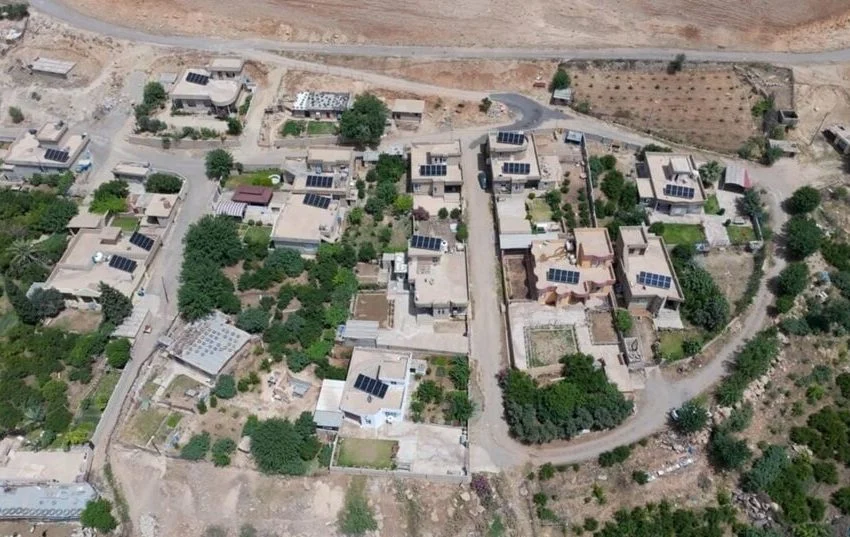
In the countryside of the Kurdistan Region, nestled in the hills of the Harir District, the solar village of Kolak was born as a unique and inspiring model in Iraq. This village is not merely a place to live; it is a fully sustainable community powered by solar energy and operating off the national grid, offering a practical solution to the chronic electricity crisis and the impacts of climate change.
The village of Kulak has 195 solar panels that power 36 homes, as well as a mosque, a school, and a community hall, all of which have a reliable, round-the-clock electricity supply. This electricity brings new life to residents by lighting homes and powering electrical appliances, improving quality of life and reducing dependence on polluting and more expensive fossil fuels.
Solar power is transforming the lives of women in Kolak in particular. With a stable electricity supply, women can now better preserve dairy products and food using refrigerators, opening up new income opportunities by selling these products. Electricity has also helped them expand their home-based activities into small-scale businesses, such as sewing and using electrical appliances, thereby enhancing their independence and economic empowerment.
This initiative is accompanied by plans to use solar energy to support regenerative agriculture and irrigation systems, in response to the challenges of drought and desertification threatening the region. The project is not limited to providing electricity; rather, it aims to build sustainable ecosystems that enable the entire community—especially women—to adapt to climate change and achieve food security.
With temperatures exceeding 50 degrees Celsius, the village of Kulak offers a glimpse of a bright future, where the sun transforms from a source of hardship into a source of hope. Kulak’s story is not just one of clean energy; it is a story of pioneering women who are writing new chapters in rural Iraqi life through sustainability and economic empowerment.