
The Global Automotive Industry Embraces Sustainability
The global automotive sector is undergoing a radical shift toward sustainability, with electric vehicles (EVs) emerging as one of the most promising solutions for achieving sustainable transportation. Amid the global push toward a greener future, the Middle East—known for its oil wealth—is making significant strides in the adoption of electric vehicles.
This article examines the growing electric vehicle market in the Middle East, focusing on the role of the customer experience in shaping its current trajectory and potential future.
Understanding Consumer Preferences in the Middle East
Consumers
The Middle East is a region rich in cultural and social diversity, which significantly influences consumer preferences. Automakers are striving to understand these preferences in order to meet the needs of customers in the region. Research indicates that consumers in the Middle East are drawn to electric vehicles featuring futuristic designs, advanced technologies, and digital innovations.
Many consumers in the region prioritize luxury in their vehicles, so automakers are investing in combining advanced technology with superior craftsmanship to produce electric vehicles that meet the expectations of discerning customers. These vehicles feature luxurious interiors, high-quality materials, and state-of-the-art entertainment systems that deliver an enjoyable driving experience.
Preferences
A recent survey found that price and product quality are the two most important factors for potential electric vehicle buyers in the region. Respondents prefer to make their own decisions and educate themselves about electric vehicles through various channels, such as social media. They prefer to purchase and own a vehicle from a well-known brand rather than lease it.
Participants place great importance on visiting showrooms and taking test drives, and they are motivated to purchase electric vehicles due to low maintenance costs, technological innovations, improved performance, and cost savings. They prefer to pay in cash and would like to have home charging stations. Increased vehicle range and charging speed are also important factors, in addition to leasing models and exceptional customer service.
The Market
The electric vehicle market in the Middle East is expected to see significant growth in the coming years, with its size projected to reach $7.65 billion by 2028, compared to $2.7 billion in 2023. This growth is attributed to several factors, including government initiatives to promote the use of electric vehicles, increased awareness of energy storage solutions, the expansion of 5G networks, and the implementation of vision documents in Saudi Arabia, the UAE, Qatar, and Kuwait.
Challenges and Motivators
Concerns about the range of electric vehicles
Concerns about the range of electric vehicles pose a major obstacle to their widespread adoption. In the Middle East, this problem is even more acute due to the long distances between cities and towns. However, advances in battery technology—which offer longer ranges and faster charging times—are helping to alleviate these concerns.
Shipping infrastructure
Governments in the Middle East are working to establish an extensive network of charging stations to support the transition to electric vehicles. For example, Saudi Arabia plans to build 50,000 charging stations by 2025, while Dubai aims to install 1,000 charging stations. These efforts not only promote the ease of using electric vehicles but also reflect the region’s commitment to sustainability.
Climatic conditions
High temperatures in the Middle East pose a challenge for electric vehicles. Electric vehicles lose some of their range in high temperatures. To overcome this challenge, automakers are improving battery cooling systems to ensure optimal performance in extreme weather conditions.
Promoting a Green Community
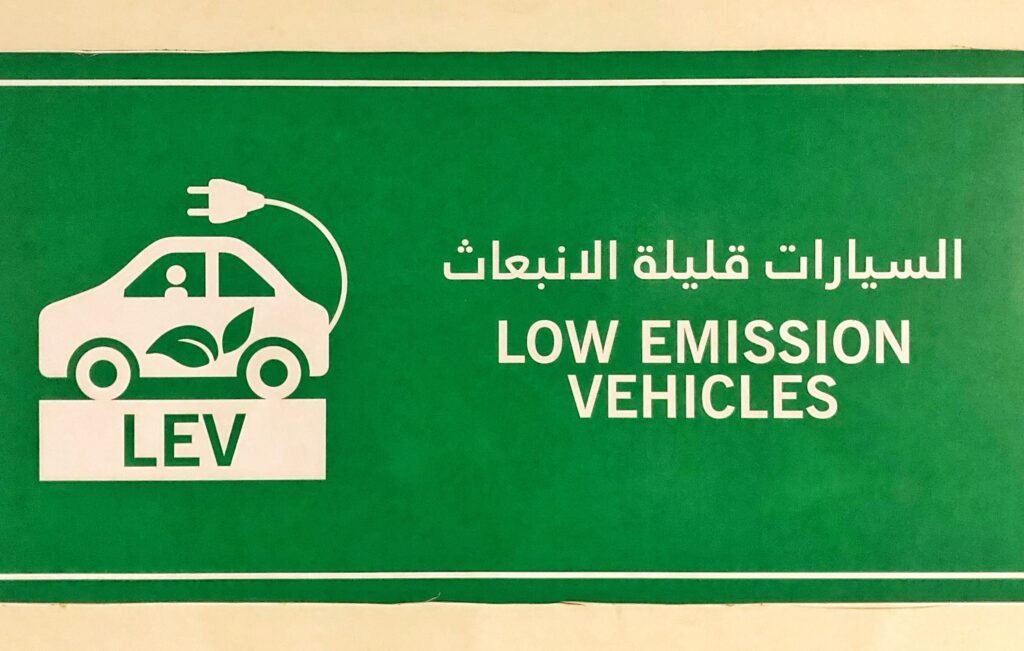
Governments, companies, and communities in the Middle East are working together to promote sustainability by encouraging the use of electric vehicles. They are offering incentives such as tax breaks, fee exemptions, and dedicated parking spaces to make electric vehicles more affordable and convenient.
The UAE Ministry of Energy and Infrastructure has announced that it plans for 50% of all vehicles on UAE roads to be electric by 2050. Automakers are working to raise public awareness of the environmental benefits of electric vehicles, such as reducing air pollution and improving air quality, as well as reducing greenhouse gas emissions.
The Future of Sustainable Transportation in the Middle East
The Middle East is striving to redefine transportation in the 21st century by combining luxury, technology, and environmental awareness. Governments, companies, and consumers are working together to create a more sustainable future based on electric vehicles. As governments offer incentives, companies develop new technologies, and consumers embrace change, the Middle East is moving toward a future where sustainable mobility is a reality.