
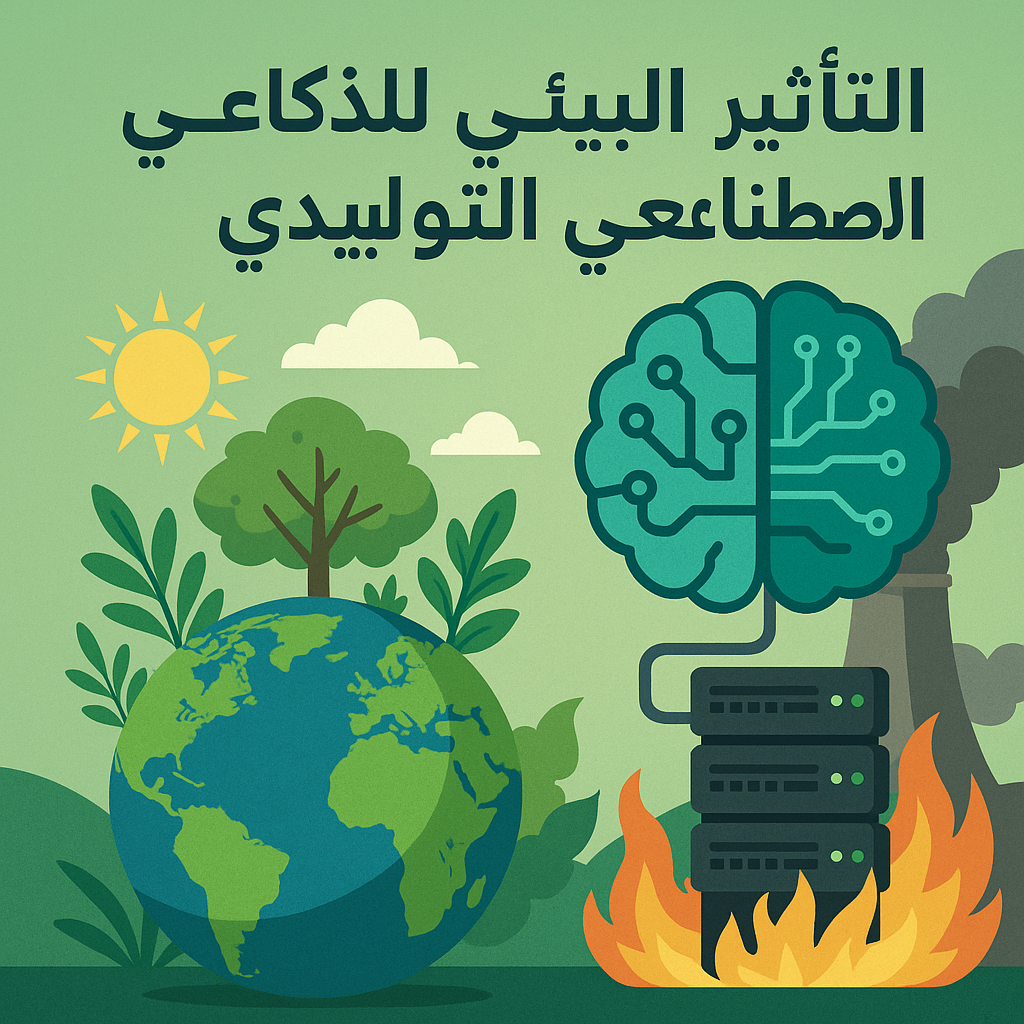
Generative artificial intelligence is one of the most significant technological innovations of our time, having revolutionized the fields of creativity and production—from the creation of text and images to the design of medications and industrial models. However, this remarkable progress is not without side effects, particularly on the environment. The environmental cost of using and training AI models poses a growing challenge that is raising concerns in both scientific and environmental circles.
Enormous energy consumption
Training generative models, such as large language models, requires enormous amounts of computational power. Recent analyses indicate that training a single large model can consume as much energy as hundreds of homes do in an entire year. This is due to the heavy reliance on data centers, which house thousands of processors and operate continuously around the clock.
Carbon emissions
This high energy consumption is linked to increased carbon emissions, as most data centers around the world still rely on non-renewable energy sources. According to scientific reports, the carbon footprint of training a large language model can be equivalent to the emissions of several intercontinental flights. This reality makes it necessary to consider how to make artificial intelligence more sustainable.
Cooling and Water Consumption
Another equally important aspect is server cooling. Data centers require large amounts of water to cool equipment that operates at high temperatures. Some studies have found that running a single server can consume thousands of liters of water, placing additional strain on natural resources in regions facing water scarcity.
Practical Recommendations for Reducing the Environmental Impact of Artificial Intelligence
To reduce the environmental impact of generative artificial intelligence, a number of practical steps can be taken:
- Support the use of renewable energy sources in data centers and promote investment in solar and wind energy.
- Developing more efficient algorithms that reduce the need for high energy consumption during training and operation.
- Reusing and recycling old electronic devices and reducing electronic waste.
- Improving data center cooling management and utilizing innovative cooling technologies to reduce water consumption.
Through these measures, we can strike a balance between technological progress and environmental conservation, and build a more sustainable future for future generations.
Summary
Generative artificial intelligence offers tremendous potential to shape a better future for humanity, but at the same time, it places a heavy environmental responsibility on our shoulders. True innovation lies not only in building intelligent systems capable of creativity, but also in ensuring that these systems are part of a sustainable future that respects the ecological balance of our planet.