
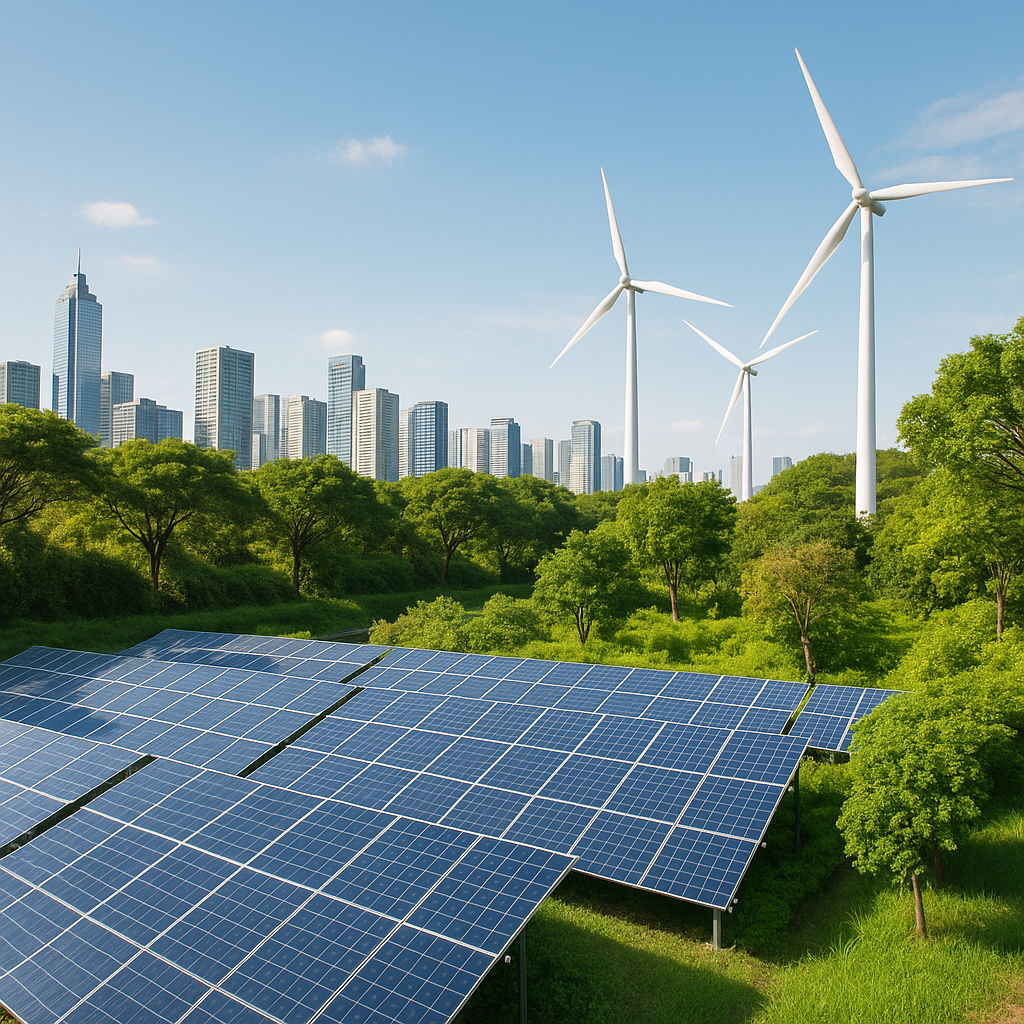
In an era of growing environmental and social pressures, the green economy emerges as an ideal solution for achieving sustainable development. This article explores the concept of the green economy, its characteristics, benefits, and the key challenges it faces. We will examine its impact across various sectors and how it can lead to a more sustainable future.
What is the green economy?
The green economy is based on principles aimed at achieving sustainable economic growth that promotes social justice and protects the environment. In this context, the green economy represents an alternative to traditional economic systems, which often focus on profit without considering their environmental and social impacts. While traditional systems tend to overexploit natural resources, the green economy seeks to strike a balance between development and the environment by stimulating innovation and investment in clean sectors.
One of the key features of the green economy is its focus on valuing natural capital, which encompasses natural resources and the ecosystem services provided by ecosystems. Natural capital is considered an essential component of national wealth and can directly influence economic growth. Unlike traditional systems, which suffer from a lack of information regarding the value of these resources, the green economy encourages an understanding of this value and promotes its conservation.
The importance of the green economy lies in its ability to create healthy and stimulating work environments, as it incorporates strategies aimed at reducing harmful emissions and promoting resource efficiency. Since these economic models take environmental costs into account, communities can rely on renewable energy sources, which helps reduce costs in the long term. The green economy also promotes sustainable behaviors that make every individual part of the solution, thereby strengthening local capacities and ensuring their sustainability.
The Benefits of the Green Economy
The green economy offers numerous benefits, whether environmental, social, or economic. It is a promising model that can help steer societies toward a better future. One of the most notable benefits of this model is the creation of new job opportunities. The transition to renewable energy, the development of green technologies, and investments in sustainable projects open up a wide range of job opportunities across various sectors, such as sustainable construction, organic farming, and waste management, thereby contributing to economic growth and reducing unemployment rates.
In addition, the green economy helps reduce environmental costs. When renewable energy sources are used instead of fossil fuels, this helps reduce greenhouse gas emissions, leading to improved air and water quality and fewer health hazards. Furthermore, the transition to a sustainable economic model can reduce the long-term cost of managing natural resources by ensuring an adequate supply of energy and water and regulating their use more effectively.
Furthermore, the green economy promotes social well-being by improving the quality of life for local communities. It focuses on fostering socially responsible practices, such as supporting local communities, improving working conditions, and ensuring equitable distribution of resources. Green projects also help meet the needs of the population in a sustainable manner, providing them with a healthy and safe environment.
In this sense, it can be said that the green economy is not merely an environmental concept, but rather a comprehensive framework that encompasses integrated aspects affecting the daily lives of individuals and communities, making it an effective solution to the social, economic, and environmental challenges facing societies today.
Future Challenges
Despite the many benefits of the green economy, this concept faces numerous challenges that hinder the achievement of its goals. One of the most significant of these challenges is the lack of policy alignment among governments and different sectors, which results in the absence of a unified strategy to promote sustainable practices. Inconsistent policies are a major obstacle, as government incentives in one sector may conflict with environmental goals in another, hindering unified efforts toward the green transition.
In addition, a lack of commitment on the part of some organizations and individuals poses a significant challenge. This problem may stem from a lack of awareness regarding the importance of the green economy, or from concerns about the initial costs of transitioning to more sustainable practices. Many companies may hesitate to invest in modern technologies or sustainable practices due to the lack of clear short-term economic viability. Therefore, education and awareness-raising are vital components of the transition to a green economy.
Furthermore, there are challenges related to implementing sustainable practices on the ground. Once the decision to implement a specific project has been made, obstacles arise, such as a lack of funding, insufficient infrastructure, or even legal frameworks that need to be updated to align with new environmental requirements. To improve these situations, legal and political systems must adapt and evolve to provide a supportive environment that fosters innovation and investment in the green economy.
It is important to explore ways to overcome these challenges by establishing public-private partnerships, investing in educational initiatives to raise awareness of the importance of the green economy, and providing financial and technical support to organizations seeking to transition toward environmental sustainability, thereby contributing to a more sustainable economy that is better equipped to face future challenges.
Conclusion
In conclusion, the green economy is a powerful tool for improving our quality of life and protecting our environment. By adopting policies and strategies aligned with the principles of sustainability, we can bring about a genuine transformation in our economies. We face many challenges, but with a shared commitment, we can build a brighter future.