
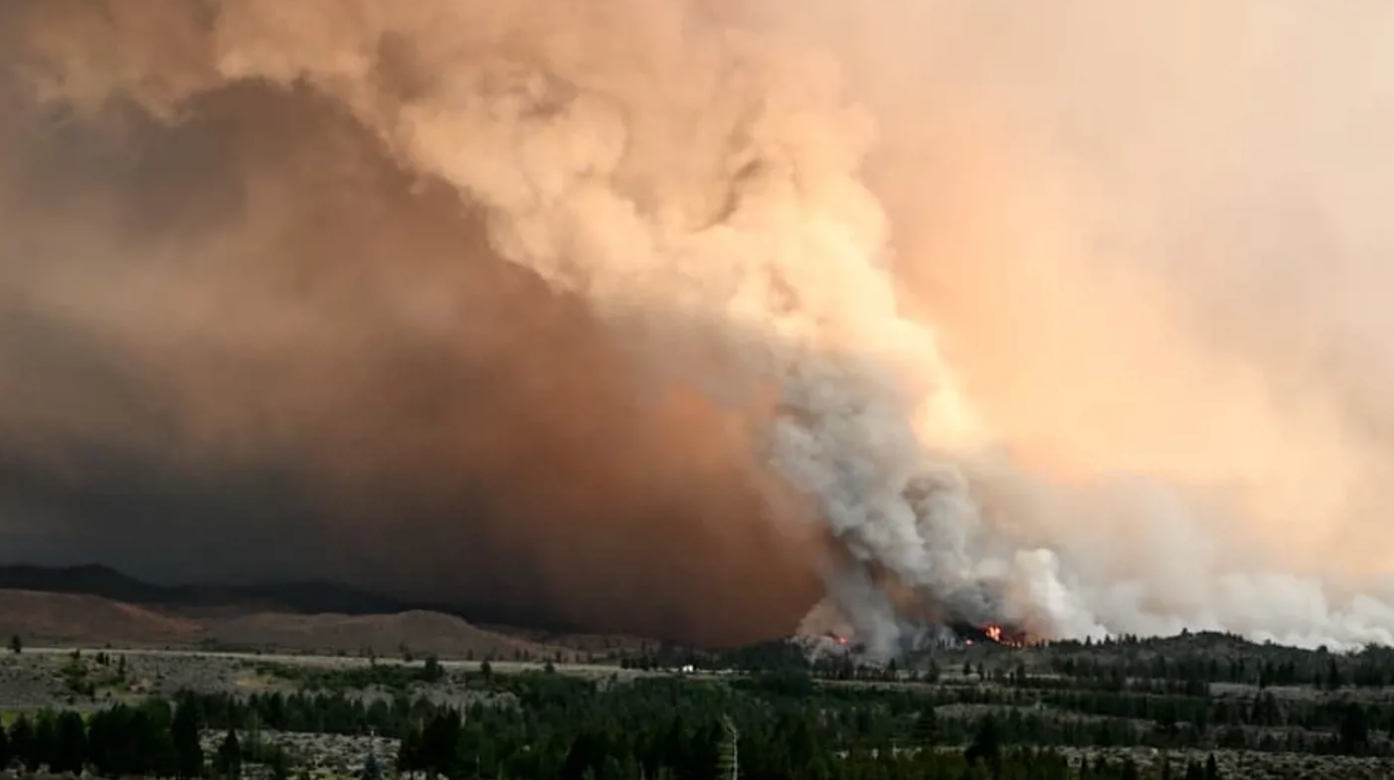
The series of massive wildfires that recently ravaged the United States as a result of rapid climate change has sounded an alarm regarding the prospects for global economic recovery in the coming years, serving as a stark warning that calls for strong international cooperation and swift action to mitigate their risks and significant environmental and economic impacts.
Recent crises—particularly wildfires—combined with accelerating climate change, are introducing new variables into the global economic landscape, directly impacting vital sectors such as agriculture, energy, and insurance, They also cause disruptions in global supply chains and increase production costs, in addition to the rising costs of recovery and reconstruction efforts, which put pressure on public budgets and affect global economic growth rates.
Several U.S. states have recently experienced one of the most devastating natural disasters in their history, as wildfires swept through vast areas—particularly in the city of Los Angeles—causing enormous human and economic losses.
Heavy financial losses
Furthermore, 2024 was a year marked by natural disasters, with financial losses reaching a staggering $320 billion, according to data released by Munich Re, making last year the fifth-highest on record in terms of total losses.
The year 2024 also saw record-breaking temperatures, which contributed to the worsening of weather-related disasters, increased their severity and frequency, and inflicted unprecedented losses on the global economy.
According to several environmental experts who spoke exclusively to *Al-Nahar*, the accelerating climate crises and the recent wildfires in the United States make it imperative for the global economy that nations join forces and implement five key strategies to avoid the negative repercussions of these crises, namely raising environmental awareness and developing fire prevention technologies.
The third essential approach involves strengthening international cooperation, supporting scientific research, and working to implement renewable energy policies, with the aim of swiftly addressing the main causes of the worsening climate crisis and reducing the likelihood of its recurrence in the future.
Extreme weather events
Commenting on this, Dr. Tahsin Shuala, an expert in environmental biotechnology, told *Al-Nahar* that the Earth has recently experienced extreme weather events such as floods, heat waves, and droughts, as a result of the planet’s temperature rising by 1.1 degrees Celsius since the start of the Industrial Revolution, amid warnings from studies about the impact of climate change on rainfall patterns, droughts, and hurricanes, as well as desertification and the spread of epidemics.
He added that recent wildfires have become a major threat, as they lead to oxygen depletion and increased carbon dioxide levels, thereby exacerbating global warming—which is why it is important to address the impacts of climate change and ensure that the most vulnerable groups are able to adapt.
United Nations data indicates that the number of disasters has doubled since 2000, with economic losses tripling, and the number of disasters could rise by 40% by 2030 if steps are not taken to reduce emissions.
Dr. Tahseen Sha'la, an expert in environmental biotechnology, emphasized that natural disasters and climate change cause significant damage to the infrastructure of many countries, which has a negative impact on the economy. The damage includes the destruction of roads and bridges and the disruption of electricity and water networks.
He added that numerous studies project that the cost of climate change to the global economy will reach approximately $38 trillion annually by 2049, with negative impacts on economic growth, including agricultural yields and labor productivity.
He explained that wildfires are devastating natural disasters that have a negative impact on economies, including the United States recently, as they destroy property and infrastructure, requiring massive investments for reconstruction.
These fires also cause losses in agricultural production and forestry, driving up prices and affecting the timber industry. In addition, they contribute to higher insurance costs, placing a burden on individuals and businesses, and negatively impacting tourism in the affected areas.
He noted that the world has become more vulnerable to the damage caused by the climate chaos afflicting the Earth, which has negatively impacted many natural resources in some countries, as the imbalance caused by climate change has become a source of concern for everyone, significantly affecting national economies. Climate change is leading to a radical shift in the global economic and agricultural landscape, which will negatively impact many major countries if they fail to recognize the risks they may face as a result of complacency in addressing the current climate chaos.